

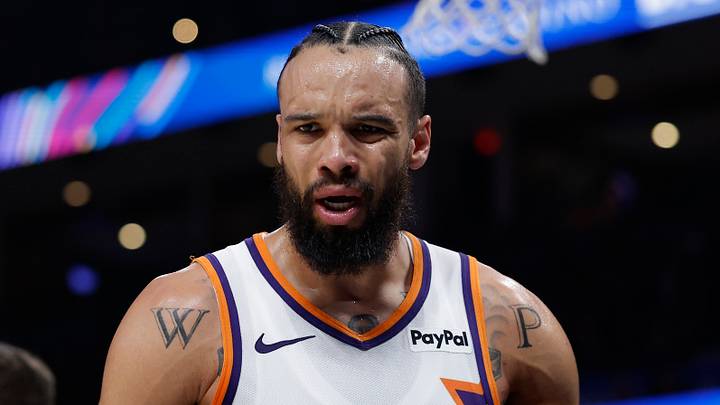
Throughout a surprising 45-win campaign a season ago, first-year head coach Jordan Ott’s calling card was the team’s defense. The Phoenix Suns flipped the script defensively from the season prior—going from 28th in defensive rating to 10th year-over-year—and made the playoffs as a result. But it’s been a wholly different story early this season.
Suns’ defense looks lost to start 2026-27 season
Through three games (again, small sample size, so remember your grain of salt), the Suns are surrendering 123.7 points per game on average. That ranks them 26th in the NBA after finishing sixth by that measure a season ago. Only the Brooklyn Nets, Sacramento Kings, New Orleans Pelicans, and Chicago Bulls have been worse defensively than Phoenix this season by that measure. Those four squads have a combined record of 1-12.
Needless to say, that does not bode well for a Suns squad looking to repeat the success they had a season ago under Coach Ott.
Their gritty, hard-nosed style on the defensive end has been MIA to start the year, with no clearer evidence than the 41-point shellacking they took from the Portland Trail Blazers in the season opener, which included a 43-12 deficit after the first quarter alone.
Additionally, the Suns finished fourth in steals per game a season ago, one of the biggest reasons for their turnaround overall. This season, though, they’re averaging nearly one fewer steal per game in the early going compared to last year and rank 19th in the league.
Phoenix is also allowing its opponents to shoot 48 percent from the field overall. Only five defenses around the association have been worse. But perhaps the biggest issue early on has been the Suns’ ability to defend 3-point shots.
Suns’ 3-point defense among the worst in basketball
As if surrendering a 48 percent shooting clip isn’t bad enough, the Suns’ opponents, through three games, are sinking 40.7 percent of their triples.
Basically, every opponent they face turns into breakout year Collin Gillespie from beyond the arc. Only the San Antonio Spurs (41.7 percent) have a worse defensive field goal percentage from distance to start the new campaign.
Now, that number is not sustainable on either side of the coin. The Suns won’t continue to allow opponents to hit more than 40 percent of their treys, and their opponents will cool off somewhat as the season goes by, but it’s a terrible look to begin the season.
That’s especially true given the Suns continue to be among the worst defensive rebounding teams in the sport. At 27.7 defensive rebounds per game so far, only the Golden State Warriors have been worse at hauling in defensive boards to end offensive possessions for their opponents.
If the Suns were sacrificing 3-point defense in order to have more bodies crash the defensive glass, they'd need to rethink that strategy.
As things stand, the Suns’ defense is struggling in a variety of areas. They’re not creating as many turnovers as they were a season ago, the defensive rebounding remains a point of contention (especially without the injured Mark Williams and Oso Ighodaro), and teams are lighting them up from beyond the arc.
As much as the roller coaster scoring output from Devin Booker and ice-cold shooting from Gillespie early on is hampering the offense, the defense is setting off big-time alarm bells.
If Ott and the coaching staff can’t figure out how to at least get back to league-average in a variety of categories, the Suns are in for a rude awakening that will surely prove last season was an aberration instead of a new norm.
 Add us as a preferred source on Google