

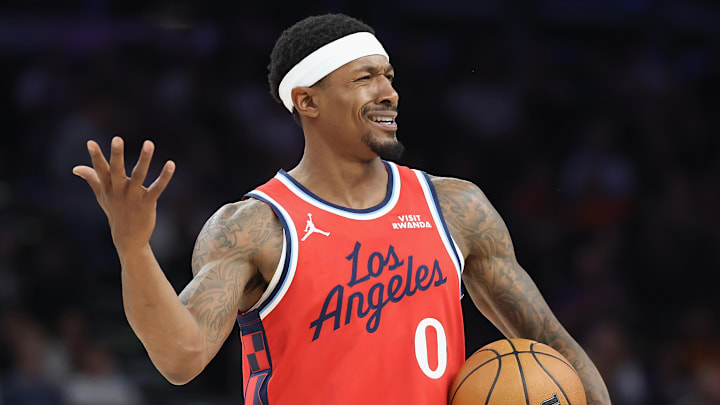
Two years after the Phoenix Suns traded for Bradley Beal, they used the waive-and-stretch provision to move on from the veteran guard. The decision allowed Beal to become a free agent, and he signed a two-year, $11 million deal with the Clippers. You can flame Phoenix for making the Beal trade in the first place, and while it isn't ideal that the team is paying him $99 million over the next five years, the decision to do so has played in their favor.
Los Angeles announced in mid-November that Beal would undergo season-ending hip surgery due to a fracture. The Clippers, a team many thought would at least be a competitor in the West, are 6-21, 14th in the conference. Meanwhile, the Suns are 15-12, seventh in the West, which isn't a place people thought they'd be, either.
Phoenix has two newcomers in its starting lineup this season — Dillon Brooks and Mark Williams. The team acquired both in offseason trades, with Brooks landing in the desert via the Kevin Durant deal.
Brooks has already been more impactful for the Suns than Beal was in two years, as he's averaging a career-high 21.7 points, 3.1 rebounds, 1.8 assists, and 1.4 steals per game. His three-point shooting percentage (32.9%) is down from last season (39.7%), but to be fair, he's never been known as a threat (last season was an anomaly). Brooks has built his reputation as an aggressive, pesky defender, which is precisely what Phoenix needed.
Suns' decision to move on from Bradley Beal looks better than ever
Brooks and Beal are two different players (clearly), but imagine telling fans two years ago that not only would the Beal trade not work out, but that Brooks would come in and be more valuable to the Suns than the former All-Star.
Beal wasn't bad for Phoenix, but his production didn't match his contract, which, again, wasn't necessarily his fault, but instead the Suns' front office for trading him in the first place. At least they started to right their wrongs over the summer by waiving him. It was time to end the Beal chapter, even if it meant resorting to a desperate measure.
Phoenix couldn't enter a rebuilding phase after trading Durant and waiving Beal, as thanks to the KD trade, they don't control their own first-round pick until 2032. The Suns needed to at least compete in what was supposed to be a stacked conference (the West is still the better of the two, but it isn't as strong as most thought), and they've done just that.
Is it ideal that Phoenix is paying Beal for the next several years to do nothing? No. But was it better than keeping him around? Yes.
 Add us as a preferred source on Google